Subscribe to Our Newsletter to Get 10% Off First Purchase
Subscribe to our newsletter, and as a thank you, we will email you a promotional code good for 10% off of your first purchase of one of our online courses or training plans.
You have successfully subscribed to our newsletter! Check your email for your code.
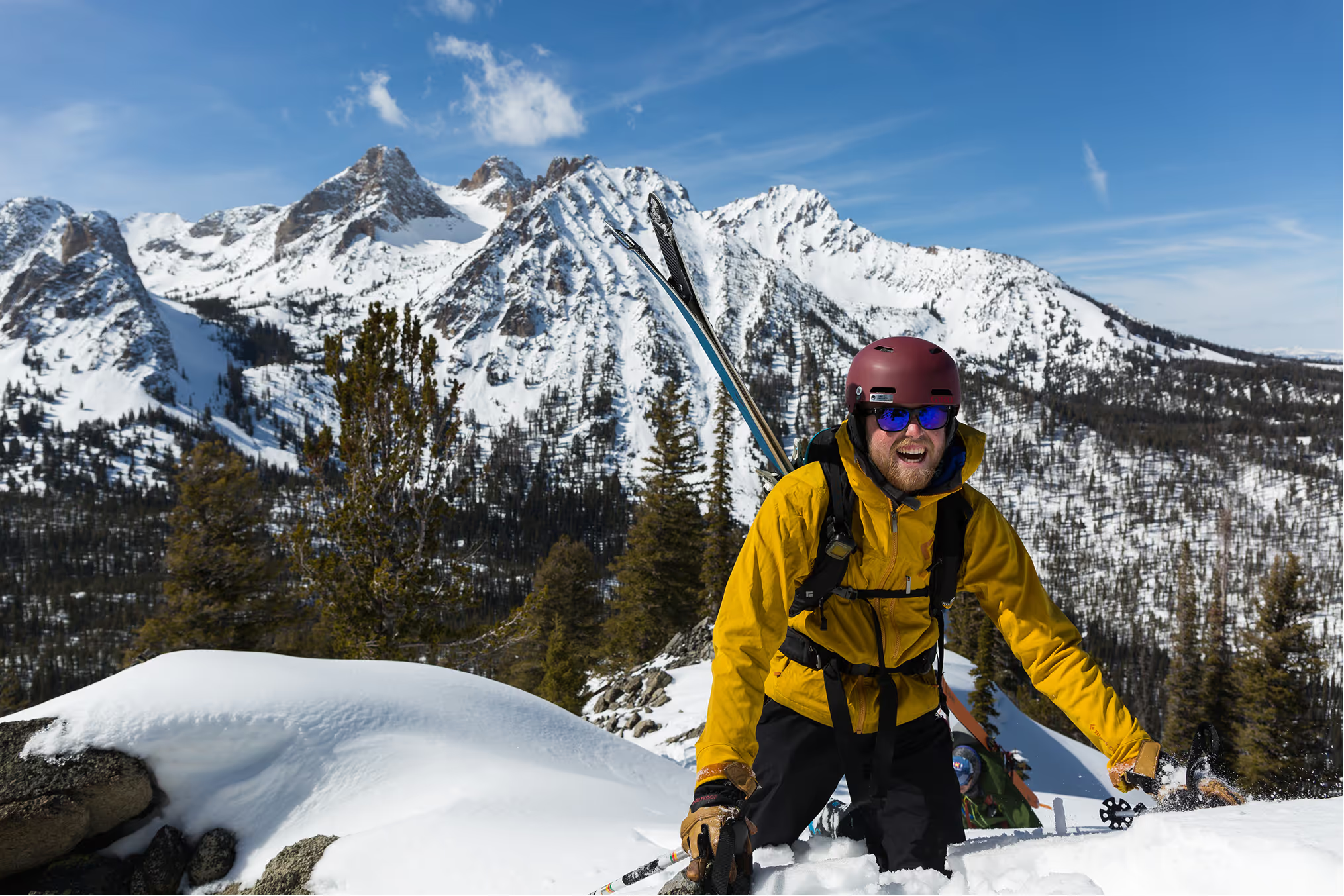
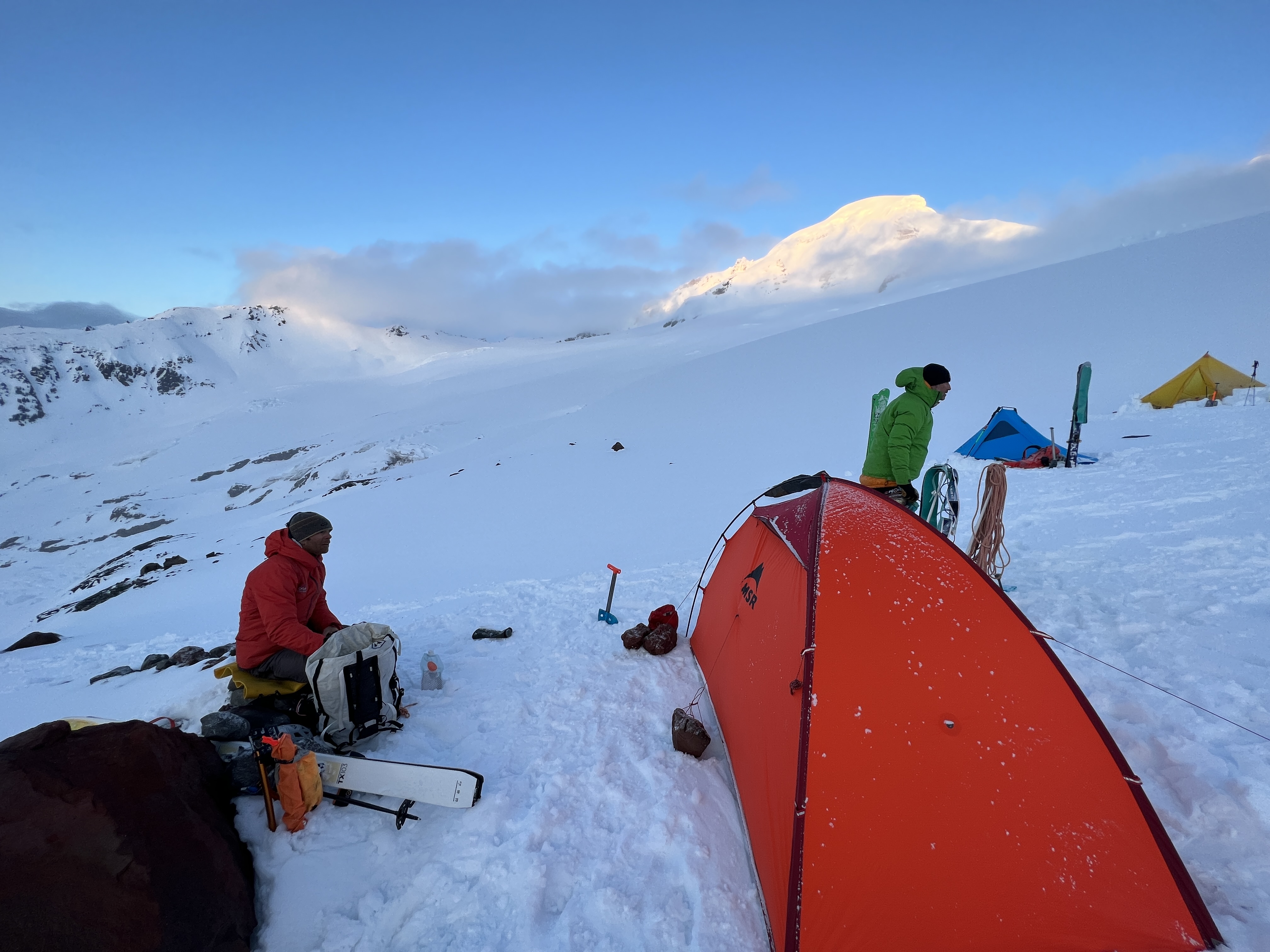
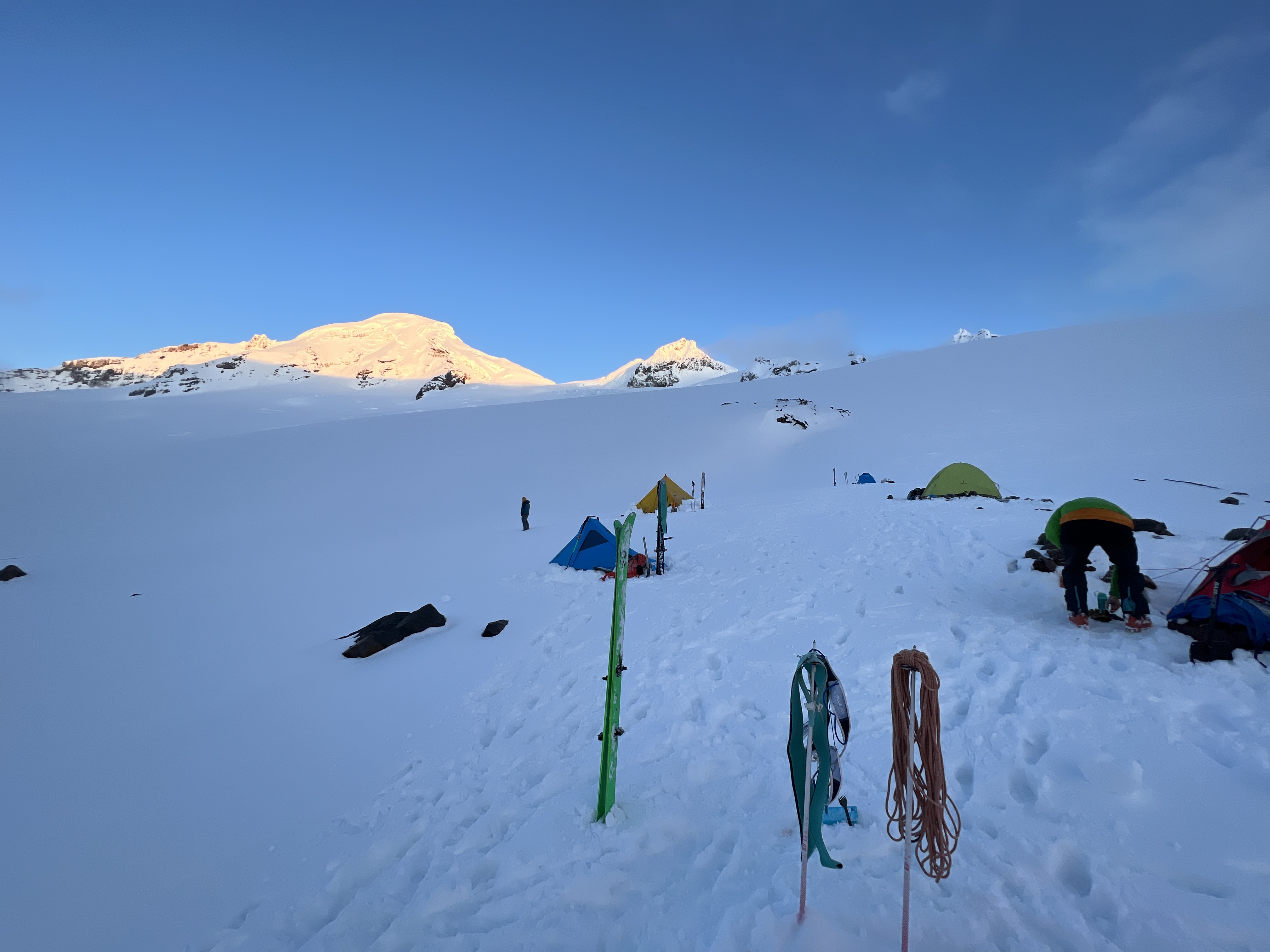
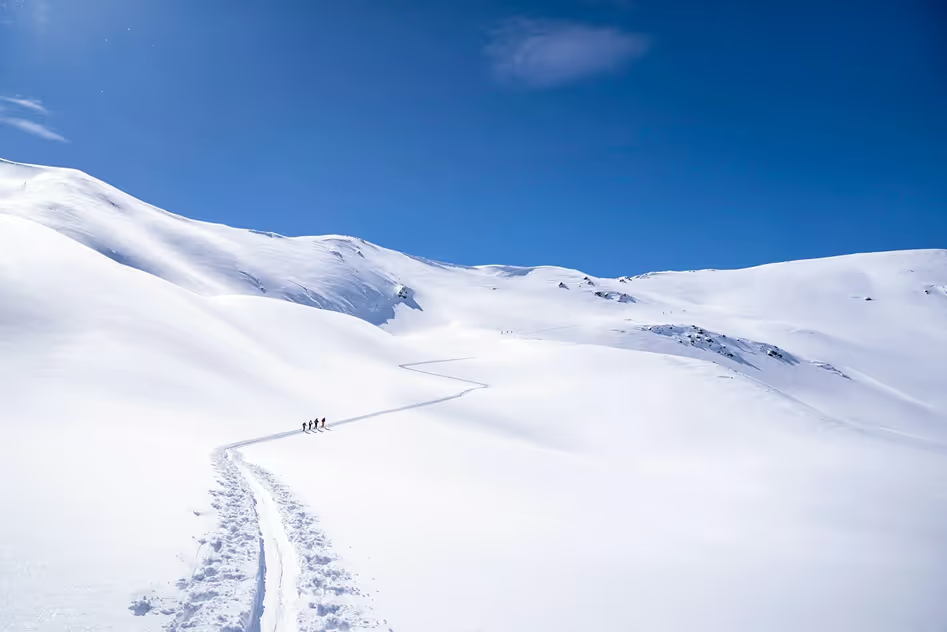
When the winter storms grow less frequent and you start debating whether flip flops are appropriate footwear for the drive to the trailhead, the spring ski mountaineering and backcountry skiing season is upon us. And few places on the planet offer an alpine experience quite like the volcanoes of Oregon and Washington.
There is something deeply alluring about skiing or splitboarding a volcano. Is it the otherworldly landscape? The quality of the snow? Or the quiet background awareness that you're ascending and descending something that, at some point in the geologically near future, could go absolutely sideways? Likely a combination of all three — and honestly, that last part probably isn't hurting anyone's motivation.
The Pacific Northwest volcanoes draw ski mountaineers, alpinists, and backcountry skiers year after year, and for good reason. Historically, they've served as excellent training grounds for more demanding mountaineering objectives like Denali or Mont Blanc. They span a wide range of difficulty, from relatively straightforward ascents on Mounts Hood and St. Helens to highly committing, technically consequential descents on Rainier or the Adams Glacier. That variability is both the greatest draw and the most common source of confusion when it comes to packing a ski mountaineering kit.
Because these mountains are constantly in flux — seasonally, daily, and sometimes hourly — determining the right gear for a backcountry skiing or splitboarding objective is never a one-size-fits-all exercise. A trip report from several years ago might give you the broad strokes of a route, but the specific conditions you'll actually face are yours to anticipate and prepare for. What we can do is establish a solid, universal baseline: the ski mountaineering gear that should live in your pack on virtually every PNW volcano objective, which you can then scale up or down based on your read of the current conditions.
Let's start from the bottom and work our way up.
Ski Mountaineering Crampons: The Foundation of Every PNW Volcano Kit
Ski mountaineering crampons are less of a suggestion and more of a non-negotiable for glacier travel and backcountry skiing on the PNW volcanoes. On almost any route, surface conditions can change without warning and force you off your skis or splitboard — whether due to a steep pitch, wind-scoured ice, or a refrozen crust that your skins simply won't grip. When that happens, you need something on your feet that will.
Since we're talking about ski and splitboard terrain, the goal is a lightweight hybrid crampon that pairs well with the stiffer footwear this discipline demands. For those rocking rigid touring boots, the Petzl Irvis Hybrid is a proven choice — the combination of aluminum and steel construction keeps weight low while still providing meaningful front-pointing capability on technical alpine terrain. The Blue Ice Harfangs are another excellent option in this crampon category. If you're running soft boots for splitboarding, consider something like the CAMP Stalker, which is designed to accommodate the more flexible sole you're working with.
A note on ski crampons — the "4x4" variety that attach directly to your bindings: these are a situational addition to your backcountry ski kit, not a baseline item. They're worth throwing in if conditions suggest you'll encounter steep, icy slopes early in the day before the sun does its work, or if recent snowfall has been scarce and you're expecting firm, consolidated surfaces on the ascent.
Ski Mountaineering Harness: Don't Leave the Glacier Without One
Your harness goes on when you hit the glacier and comes off when you're back at the car. Could you theoretically remove it on certain lower-angle sections? Sure. But the unpredictable nature of glaciated alpine terrain means that keeping it on and instantly accessible is simply good practice — think of it as cheap insurance that weighs almost nothing.
The ski mountaineering market has pushed hard toward dual-point harnesses in recent years. While these can shave a few grams off your backcountry ski kit, they introduce a level of fuss that most people don't need — and in a high-stress moment on a mountain, fuss is the enemy. Unless you've practiced extensively with a dual-point system and feel genuinely fluid with it, stick with a traditional single belay loop option. The Blue Ice Choucas Pro is a strong pick here. It's light, low-profile, and purpose-built for the demands of ski mountaineering and alpine climbing.
Two features are worth prioritizing when selecting a ski mountaineering harness. First, drop-away leg loops. When you're standing on a slope with crampons on and your legs are tired, the ability to detach the leg loops rather than stepping through them is not a luxury — it's a serious quality-of-life upgrade that can prevent a crampon point through your pants, or worse. Second, an ice screw holder on one of the leg loops. This lets you carry a single screw in a secure, easily accessible position while keeping your waist loops free for other gear.
Crevasse Rescue Kit: Essential Gear for Glaciated Backcountry Terrain
The crevasse rescue kit is the most intellectually interesting and emotionally loaded collection of items you'll carry into glaciated mountains. It's gear you should be deeply practiced with and genuinely hope you never need. For any backcountry skiing, splitboarding, or ski mountaineering objective that crosses glaciated terrain, it is absolutely non-negotiable.
There is no universal consensus on the exact contents of a crevasse rescue kit — the right answer varies based on team size, skill level, and the specific rescue methodology you're trained in. Are you building a simple 3:1 Z-drag? Planning to rig a drop loop for a 5:1? The techniques you've practiced will drive the gear you carry, which is why there's no substitute for formal instruction in glacier travel and crevasse rescue.
(Speaking of which — Mountain Training Center has an entire crevasse rescue course currently in production, slotted for release in 2027. Worth watching for.)
What we can offer is a well-tested baseline kit that gives a capable ski mountaineering or alpinism team the tools to build just about any mechanical advantage system they might need:
Petzl Micro Traxion (progress capture pulley) — The modern standard for crevasse rescue gear. Expensive, yes. Indispensable, also yes. The Nano Traxion has found its way into nearly every serious ski mountaineer's kit for good reason: it's compact, light, and remarkably versatile across multiple hauling configurations.
Petzl Tibloc — A lightweight, no-frills rope grab that pairs well with the Micro Traxion and functions as an ascender in a pinch. Small enough to forget it's there until you need it.
Beal Jammy Prusik — Prusik loops are not all created equal. The Beal Jammy grips exceptionally well on the skinny hyperstatic ropes that have become common in ski mountaineering and backcountry skiing kits. That grip performance on small-diameter cord is exactly why it earns a spot here over more generic options.
2-3x Wire Gate Carabiners — Any will do but we prefer something like the CAMP Nano 22. Lightweight, snag-free, and appropriately sized for the thin cords and ropes in your alpinism kit.
2x Locking Carabiners — For your critical connection points in any rescue system. The Attaché is a well-proven, bomber locker that plays nicely with all modern hardware.
5m length of 6mm diameter cordolette — Versatile, durable, and useful across a wide range of applications from equalizing anchors to building improvised systems. If you want to step up, 5.5mm tech cord is also excellent, take a look at some of Sterling’s offerings or just go drop into your local climbing shop.
1x Ice Screw (17cm or 21cm) — Your anchor when you can get down to ice on a glaciated volcano. In the event of a crevasse fall, placing a screw and clipping into it can remove your weight from the rope entirely, making the job of the rescuers above dramatically easier or it can just as easily serve as part of the rescue anchor from above. Don't go shorter than 16-17cm.
A critical note on team dynamics and crevasse rescue: in a two-person ski mountaineering team, each person needs to be carrying essentially a full kit — if one person falls into a crevasse, so does their gear. In a group of three or four, you can begin distributing the load, but redundancy remains the guiding principle. The person carrying the most gear should never be the one out front.
Ropes for Ski Mountaineering and Glacier Travel
Few topics generate more confusion in ski mountaineering and backcountry skiing circles than rope selection. Single, half, twin, hyperstatic, static… the terminology alone is enough to send people to forums where they will receive contradictory advice from strangers with a startling amount of confidence.
So let's keep it simple.
For PNW volcano ski mountaineering objectives, bring two separate 30m Petzl Rad Lines. The Rad Line has become the industry standard for lightweight glacier travel and crevasse rescue applications in both ski mountaineering and alpinism. It's a hyperstatic rope — meaning very low stretch under load — which is exactly what you want for building efficient hauling systems. At 6mm diameter, it's small and light enough that the "best rope is the one you actually bring" argument has no teeth against it.
The two-rope system matters as much as the rope choice itself. Two shorter ropes distributed among your team is not only more efficient weight-wise — it's genuinely safer for glacier travel. A single long rope means one heavy coil, typically on one person. Two shorter ropes spread the load and ensure that if the rope carrier goes in, the team doesn't lose its entire rope supply. For the vast majority of PNW volcano ski mountaineering objectives, two 30m Rad Lines gives you everything you need.
Ice Axe: Non-Negotiable for Alpine and Ski Mountaineering Terrain
Rounding out the baseline ski mountaineering kit is a reliable ice axe. And to be direct about something: a Black Diamond Whippet — a ski pole with a pick — does not meet this requirement. It has its uses in backcountry skiing, but it is not a substitute for a real axe on serious alpine terrain or for anchor building.
For ski mountaineering and alpinism in the PNW, you're looking for something that balances low weight with genuine technical capability. The Petzl Gully and the Blue Ice Akila LT are two strong options. The key feature to look for is a hand catch which is a small protrusion on the shaft just above the spike. This is so that when you encounter steep terrain where you actually need to swing the axe and generate real force, you have something stopping your hand from sliding down the shaft.
Match the axe to your objective. Just don't leave it in the car.
Building Your Ski Mountaineering Kit: How to Flex Up or Down
Everything above represents a solid, defensible baseline for the majority of PNW volcano ski mountaineering and splitboarding objectives. The beauty of building from a strong foundation is that it becomes very clear what to add when conditions or objectives demand it. More technical alpine routes might warrant climbing protection, additional cordolette, or a rappel device. More moderate backcountry skiing objectives on well-traveled routes might allow you to travel a little lighter. The mountains will tell you what they need if you're paying attention.
Stay current on conditions, dial in your crevasse rescue practice before you need it in the field, and build your kit with intention. Volcanoes reward preparation generously.
Editors note: some, not all, of these links are affiliate links. This means that we recieve a small kickback at no cost to you if you end up purchasing through one of the links. Affiliate links do not impact whether or not we recommed something - that would be uncool.