Subscribe to Our Newsletter to Get 10% Off First Purchase
Subscribe to our newsletter, and as a thank you, we will email you a promotional code good for 10% off of your first purchase of one of our online courses or training plans.
You have successfully subscribed to our newsletter! Check your email for your code.
Transitioning to Trail Running: Making the Most of Your Winter Fitness
By
Will McKay
•
3/19/26
Trail Running
Training
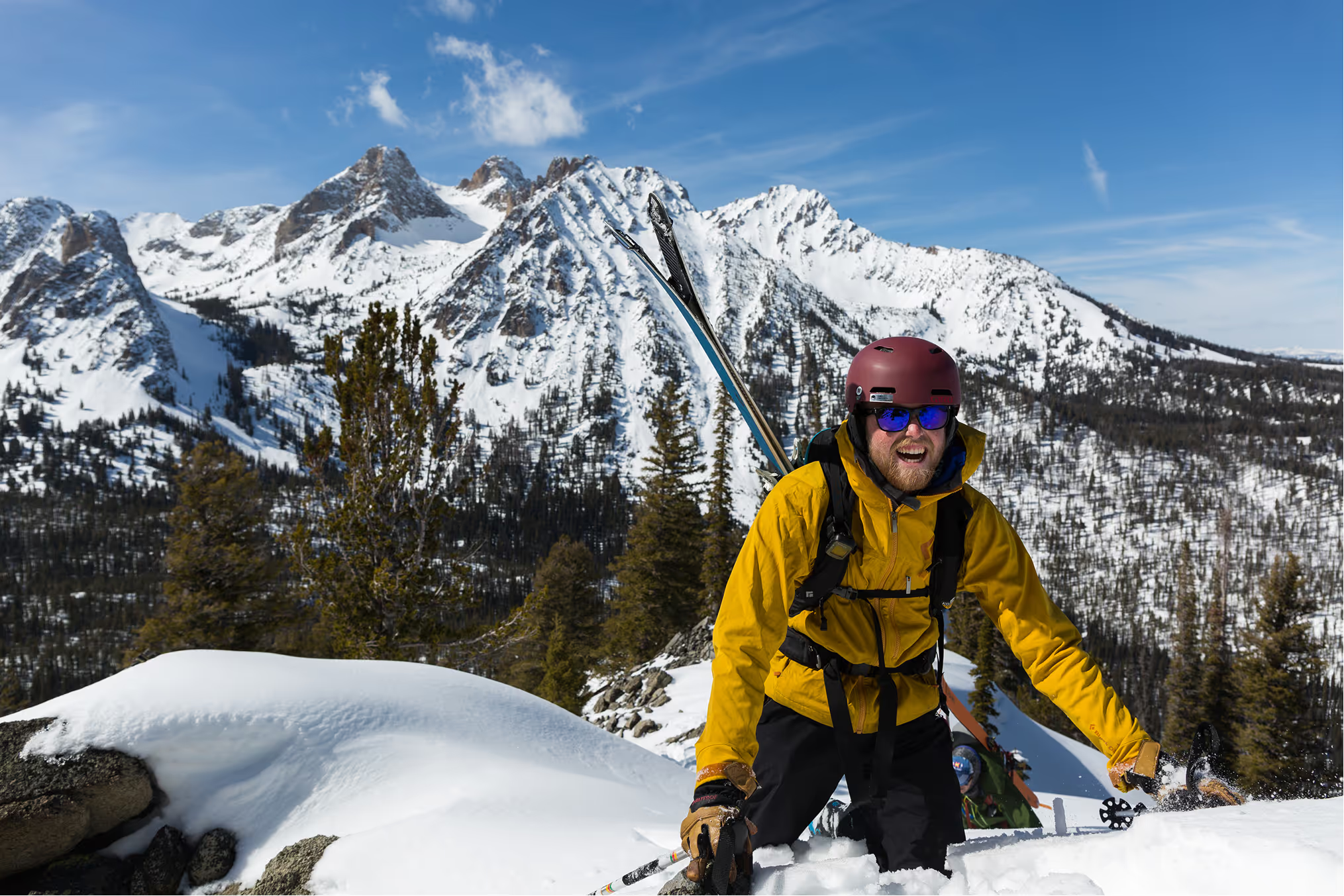
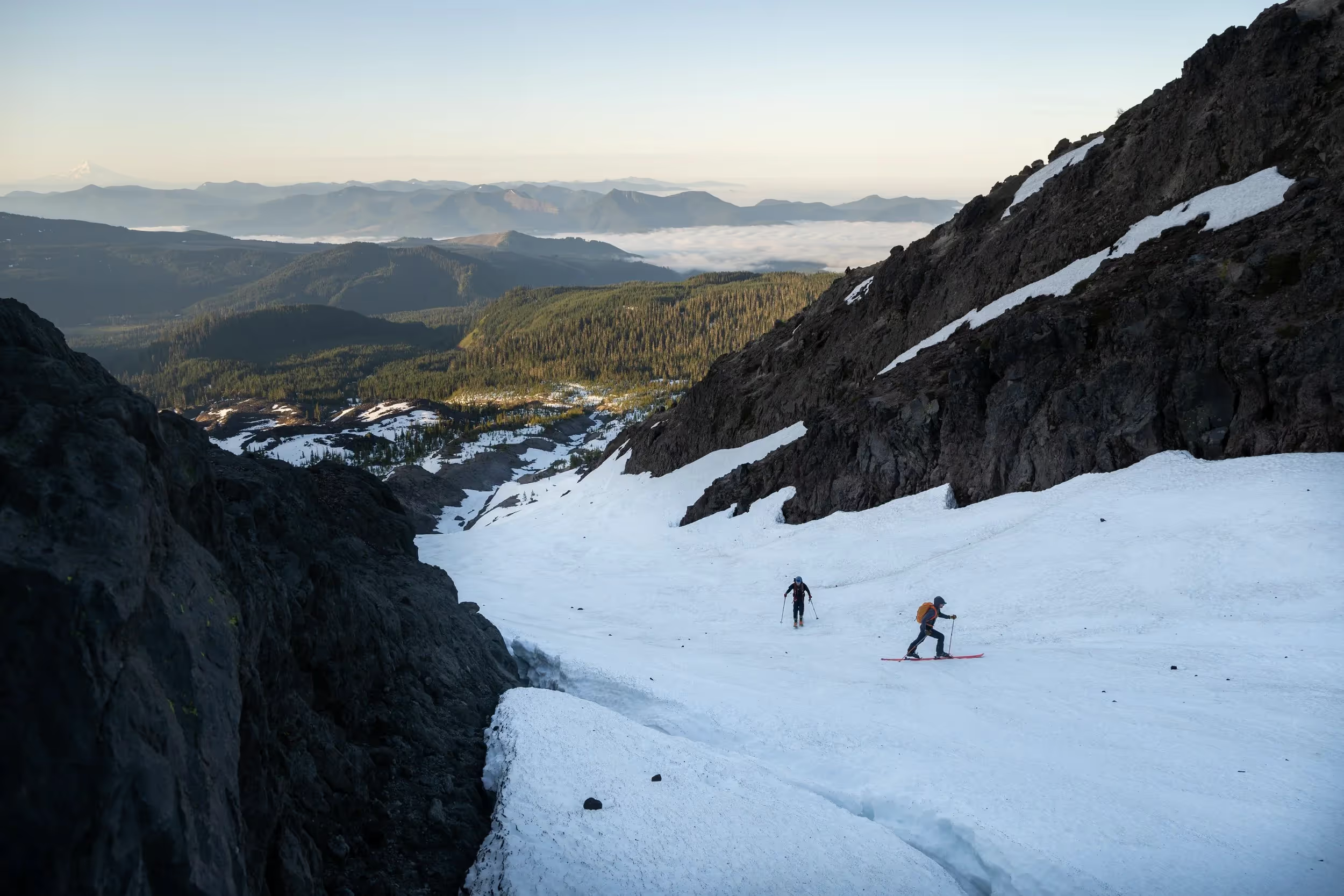
If you've spent the last few months skinning up couloirs, booting ridgelines, or skiing refrozen crud (thanks winter), chances are you're currently harboring a strong aerobic engine right now. The question isn't whether you're fit enough to start trail running — you almost certainly are. The question is whether your body is ready for what running actually demands.
That's a distinction worth sitting with for a minute. While similar aerobically, the movement and loading patterns are quite different.
Backcountry skiing and splitboarding are outstanding for building cardiovascular capacity. Long days in the mountains, sustained climbing, variable terrain — all of it stacks up into real, durable fitness. But here's the thing: your lungs and heart adapted beautifully, while your tendons, joints, and connective tissue got a relative vacation from impact. Running changes that equation fast and sometimes, if unprepared, painfully. Every stride is a small collision, and over the course of miles and weeks, that adds up in ways your body isn't quite prepared for yet — even if your heart rate tells a different story.
This is exactly why the transition from winter mountain sports to trail running requires more thought than simply swapping boots and shedding layers.
The most common mistake fit athletes make in the spring is letting their cardiovascular capacity outpace their structural readiness. You feel good, your heart rate is low, you're moving easily — so you push the volume. Then two or three weeks in, something starts talking to you. An ankle, an Achilles, a hip. For me, it was always the backside of my left knee. These aren't signs of weakness; they're signs that the tissues needed more time than you gave them.
The smarter move is to treat the first several weeks of running as an investment rather than a cash-out. Keep the early efforts easy and aerobic, lean into varied terrain rather than grinding out road miles, and resist the urge to benchmark yourself against last summer's fitness right away. You'll get there faster by being patient now than by limping into May.
A few things worth keeping in mind as you make the shift:
Running volume doesn't translate one-to-one from ski days. A four-hour tour and a four-hour run are completely different demands on the body. Start your running volume conservatively — somewhere around 60% of what your winter endurance might suggest — and build from there.
MONDAY - At home tissue readiness exercises and rest
TUESDAY - Easy 45min run, RPE of 3-4
WEDNESDAY - Moderate intervals, 60 min in total
THURSDAY - Easy 30 min run, RPE 3-4 or optional rest/cross train
FRIDAY - At home tissue readiness exercises and 45 min cross train (bike/ski/hike)
SATURDAY - Easy 60 min run, RPE 3-4
SUNDAY - Easy 45 min run, RPE 3-4
You’ll notice that the total time for this week is only around 4.5 hours. Compared to backcountry skiing/riding, that’s equivalent to a single or, even sometimes, half a day of touring.
Downhill running deserves special attention. Descending loads your quads eccentrically in a way that skinning rarely does, and it's one of the fastest ways to accumulate soreness that derails the whole transition. Reintroduce descents gradually and deliberately.
Some soreness is normal and expected. What to watch for is pain that escalates during a run, lingers more than a day, or changes how you move. Those are signals to back off, not push through. Limping when you role out of bed to make coffee? You’ve likely pushed it a bit too far.
Stay aerobic, especially early. The trails and warmer weather will tempt you. The fitness is there. But keeping most of your early runs in an easy, conversational effort gives your structure time to catch up to your engine.
The good news is that winter mountain athletes are genuinely well-positioned to become strong trail runners. The aerobic base is there. The mental toughness is there. The comfort on varied terrain is there. What's needed is a thoughtful bridge between one discipline and the other. One that respects what running actually asks of the body.
If you’re in need of an easy to follow, well structured training plan than that’s exactly what our 8-Week Trail Running Transition Plan, developed by Tyler Fox of Topographic Endurance in collaboration with Mountain Training Center, is for. It's designed specifically for athletes coming out of a winter of backcountry skiing or splitboarding with a strong base and a smart plan for carrying that fitness onto the trails. If you're ready to make the switch, this is the structure to do it right.