Subscribe to Our Newsletter to Get 10% Off First Purchase
Subscribe to our newsletter, and as a thank you, we will email you a promotional code good for 10% off of your first purchase of one of our online courses or training plans.
You have successfully subscribed to our newsletter! Check your email for your code.
If Denali has been on your radar for months or years, you've probably typed some version of "beginner's guide to climbing Denali" into Google at least once. Leading up to an expedition, the whole thing can feel like its own mountain, a tangle of logistics, gear lists, unknowns, and what-ifs stacked on top of each other before you've taken a single step on the glacier.
The good news: it's manageable when you break it down. Every piece of this process can be worked through systematically, checked off, and built upon. That's the approach. Bite-sized chunks, not one overwhelming wall.
Pre-Trip Logistics
The first big chunk is also the most foundational: the decisions that shape everything else. Who's on your team? Are you going self-guided or hiring a guide service? For climbers without significant glacier and crevasse rescue experience, a guide service is worth serious consideration. Denali doesn't have much patience for learning those skills for the first time at altitude. If you're going self-guided, make sure your rope team has the technical background to back it up.
Once you've settled the team question, work through timing (most expeditions run May through early July), your travel method (skis or snowshoes, though skis are the norm and worth learning before you arrive), and your overall availability. Three weeks on the mountain is standard, plus travel days on either end.
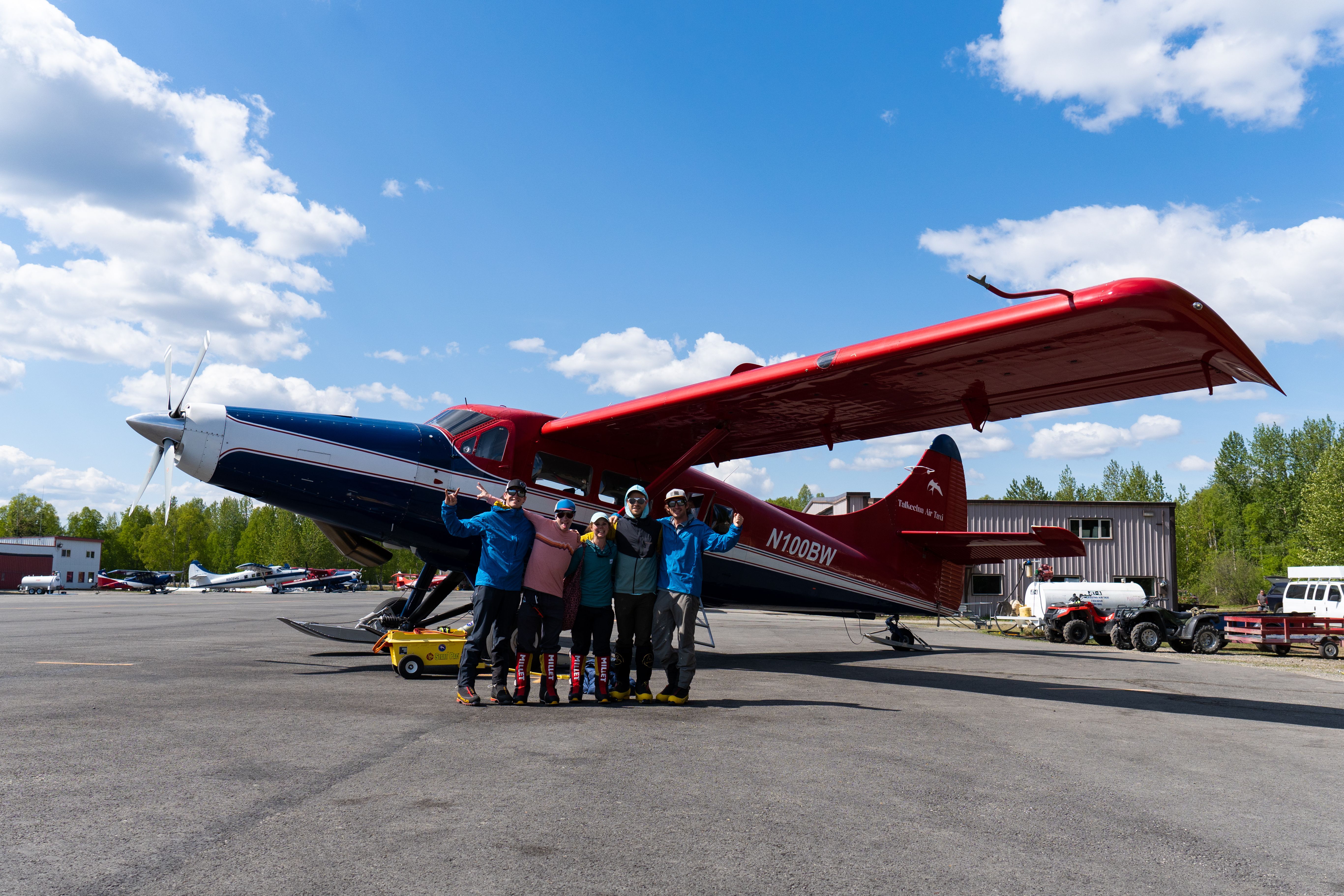
From there, move into the formal logistics: securing your National Park Service permit through the Denali Mountaineering Rangers well in advance, choosing an air taxi service out of Talkeetna, and figuring out your lodging and staging plan in town. Talkeetna is small but well-equipped for expeditions. Don't underestimate how valuable a day there is for last-minute sorting. Budget-wise, between permits, flights, gear, and travel, plan for this to be a significant investment. Denali is not a cheap objective.
Training
Once logistics are locked in, training becomes the primary focus and it deserves to be treated that way. Denali is unforgiving, and once you fly onto the glacier, there's very little you can control: weather, conditions, the mountain's mood. What you can control is how prepared your body is when you arrive.
Training isn't limited by geography. You don't need to live near mountains to prepare well. What you do need is time and consistency. Build a strong aerobic base through long-duration cardio, incorporate weighted carries to simulate hauling a sled and a loaded pack simultaneously, and if you're traveling on skis, get on them as much as possible beforehand. Shoulder and hip strength matter more than most people expect. Give yourself several months of structured preparation, not weeks.
Gear
As the expedition approaches, gear comes into focus. Break it into three categories: personal gear, group gear, and clothing.
Personal gear includes your hardgoods, mountaineering boots, ski boots, crampons, ice axe, sunglasses, glacier glasses, along with the smaller items that make three weeks on a glacier livable: charging cables, a book or cards, personal toiletries, a journal if that's your thing.
Group gear is everything shared across the team: tents rated for severe conditions, stoves, fuel, ropes, pulleys and prussiks for crevasse rescue, and the hardware that moves with the team carry to carry.
Clothing deserves its own category entirely. Your layering system needs to be tested, trusted, and dialed in before you land in Alaska. Every piece should work seamlessly with the others, and each layer should be able to function independently if conditions change fast, which they will. Denali is not the place to try something new. Wear it, test it, suffer in it at home first.
Food
Food on Denali is its own discipline, and it's worth thinking through carefully. Appetite is one of the first things to go at altitude, so variety isn't a luxury. It's a strategy.
For breakfasts and dinners, have a mix of fast options (oatmeal, instant meals) for big move days, and slower comfort meals (pancakes, bagels with smoked salmon) for rest and acclimatization days. Both matter for morale.
For "lunch," think in two lanes. Moving food lives in the top of your pack and needs to be easy to eat on the go: meat sticks, bars, peanut butter cups, a mix of sweet and savory so something always sounds good. Rest-day and tent food can be more involved: meat and cheese with crackers, tuna with seaweed snacks and sriracha. Things that would be a hassle on the move but are worth taking time for when you're stationary.
Set your summit snacks aside from day one and don't touch them. Simple, fast-burning carbs work best up high: Swedish fish, honey stingers, shot bloks.
Hydration is harder than it sounds at altitude. Keep a variety of electrolytes and sports drink mixes on hand, and make sure you have a reliable caffeine source. Instant coffee carries a lot of morale on cold mornings.
The general rule: if it doesn't sound good in your kitchen, it won't sound good at 14,000 feet. Bring food that genuinely excites you.
On-Mountain Logistics
Before you fly in, get a few things sorted mentally. How will your team set up camp and kitchen each time? What's the bathroom protocol? Has everyone rigged a sled before? Do you have the route dialed, GPS loaded, waypoints marked, previous trip reports reviewed? What weather resources will you have access to, and who's responsible for monitoring them? A satellite communicator like a Garmin InReach is essential, both for weather forecasts and emergency contact. These questions answered on the ground feel obvious. Answered for the first time at 7,800 feet in a storm feel very different.
Then You Go
All of these pieces, the permits, the training, the gear, the food, the team decisions, exist to do one thing: give you the best possible chance once the wheels are up and Alaska is below you. The mountain will still surprise you. It always does. But showing up prepared means you get to be present for it, instead of scrambling to catch up.


.jpg)
.jpg)